Neurodivergence · Sensory Science · Play

Some people don’t experience less. They experience more.

A hypothesis about autism that changed how I build rooms, run stages, and think about attention. Written plainly, for anyone who lives with an intense world or loves someone who does.

Next Wednesday · Costa Mesa, CA

I’m speaking and playing at Cocktails for a Cause

Autism Health Inc is a 501(c)(3) working the load-bearing side of this: scholarships, parent coaching, support groups, monthly webinars, and research funding. Cocktails for a Cause is their fundraiser, and tickets and donations go straight there.

DateWednesday, August 5
Time6:00 PM PDT
WhereThe Park Club
650 Town Center Dr
Costa Mesa, CA
Hosted byAutism Health Inc

I’ll be weaving my message amidst songs that emphasize the points :: what follows below, carried by the music rather than delivered next to it.

Tickets & donations →

If we met at a summit, or on a plane where a ukulele wouldn’t stop, or somebody handed you a card with a burned imp on it, hi. I’m Ryan.

I research play :: how it works in the body, and what it does to a nervous system. I teach, I write, and I make music. And I talk about neurodivergence every chance I get, because one idea from that field reorganized how I do all of the rest of it.

If you’d rather hear it than read it :: a short introduction

The idea, in one breath

Intense World Theory is a hypothesis about autism from neuroscientists Henry Markram and Kamila Markram. Instead of describing autism as a set of missing abilities, it describes a nervous system that runs hot :: circuits that perceive more, attend harder, remember longer, and feel stronger.

In that picture the world isn’t muted for autistic people. It’s turned up. Lights are brighter, sound is sharper, feeling arrives as weather. And what gets read as withdrawal is better understood as protection from a flood.

Being straight with you: it’s a hypothesis, not settled science. Researchers still argue about it, and no single theory explains every autistic person. I hold it the way I hold a good song. Not as the final word, but as something that makes people more understandable to each other.
Why a play researcher keeps returning to it

It flips the story from broken to carrying more

My work is about experiential capacity :: how much a person can notice, feel, and process, and how that capacity is built or eroded by the environments we put bodies in. Intense World Theory is that same question asked from the other end. Not how do we grow capacity, but what happens when capacity is already saturated before anyone walks in the door.

When you assume someone is feeling everything at full volume, you stop asking them to perform comfort and start building rooms they can actually be in. You get curious instead of corrective. You protect instead of push.

And here’s how I know the idea points the right direction: every kindness it asks for is a kindness you can practice on anyone. Softer rooms, honest pacing, more ways to say things, fewer demands to pretend. Nobody is harmed by a world that assumes people feel deeply.

The day work :: researching play through physics, physiology, and psychology

On stage

How I run a room

Whether I’m giving a talk or playing a set, these hold. They aren’t accommodations bolted on afterward. They’re the design.

  • Ear protection is welcome and never weird. So are sunglasses, headphones, fidgets, and stimming.
  • Nobody gets pulled on stage. Participation is invited, never extracted.
  • Come late, leave early, step out, come back. Moving is not rudeness.
  • All communication counts :: spoken, typed, signed, AAC, or none at all. Silence is a full sentence here.
  • Where the venue allows it, there’s a quieter corner to land in.
  • Ask me anything about access at iam@ryantoday.com. If I can bend the room toward you, I will.
The other art form

Some of this comes out as a horror circus

Alongside the research and the teaching, I front IMP Circus :: my more visceral art form, and the place where this idea stops being an argument and becomes an experience. On that stage I go by Skex Pl’nesh and sing in an invented language.

That last part isn’t a gimmick. A song in a language nobody on Earth speaks has no lyrics to decode and no correct reaction to perform. Whatever the song does in your body is what it means. Every listener arrives equal, whatever their sensory style, whatever their communication style.
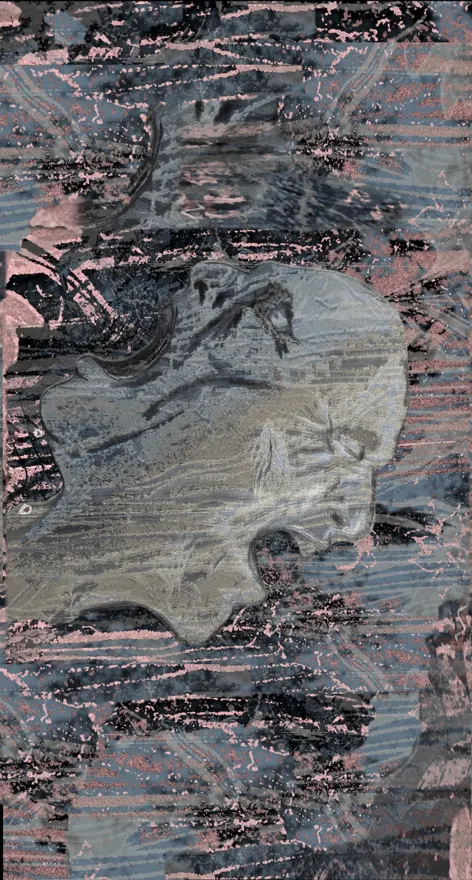
Hand-made artwork of two faces carved from one stone, one screaming and one laughing
From the back of my card :: one face screaming, one face laughing, the same stone

Go deeper

The Markrams’ 2010 paper, “The Intense World Theory: a unifying theory of the neurobiology of autism,” is public and readable. Read the critiques too :: they’re part of taking it seriously. Then go listen to autistic people themselves, who were describing intense worlds long before anyone tried to measure one.

If any of this sounds like your world, or someone you love lives there, you’re the reason the page exists.

Go Deeper

Related

Beyond Five Senses

Interoception, proprioception, and the dozens of channels you were never taught to count. All of them trainable.

Read more →

The Six Inputs

The framework for how environments act on tissue. Pressure, temperature, vibration, light, fields, chemistry.

Read more →

Sound & Music

Why a ukulele is a neuroplasticity tool, what breath and drone do to a nervous system, and the science of biophonetics.

Read more →

Get in Touch

Booking a talk, a set, or both? Reach out.